Shalini Pandey Denies Viral Private Video Claims, Calls AI Deepfake Cyberbullying
Online misinformation can quickly damage a celebrity’s reputation. Moreover, AI-generated content has made it harder to distinguish authentic footage from manipulated media.
An alleged private video controversy involving actress Shalini Pandey has drawn attention to these concerns. However, readers should distinguish verified statements from unconfirmed social media claims.
The headline describes a denial and allegations of AI-assisted cyberbullying. These claims require reliable sourcing before publication as established facts.
Table of Contents
Who Is Shalini Pandey?
Shalini Pandey is an Indian actress known for her work in Telugu and Hindi cinema. She gained widespread recognition after starring opposite Vijay Deverakonda in the 2017 Telugu film Arjun Reddy.
Since then, she has appeared in several projects across different film industries. Her notable credits include Mahanati, Jayeshbhai Jordaar, and Maharaj.
However, the recent AI-generated video controversy has shifted attention toward her personal privacy. The incident also highlights the growing risks celebrities face from manipulated digital content.
Shalini Pandey Responds to the Viral AI-Generated Video
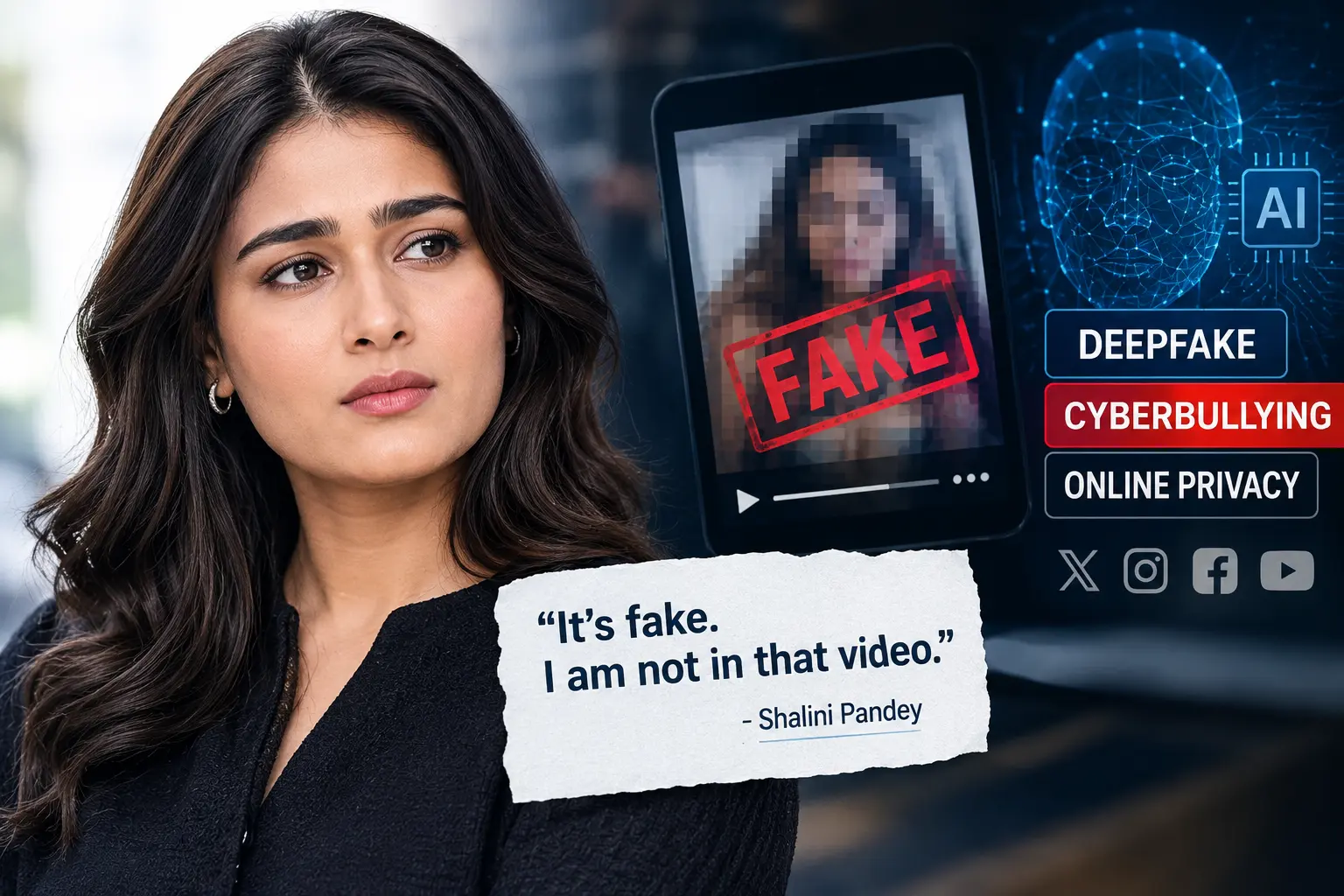
On August 31, 2026, Shalini Pandey addressed a fabricated video circulating on social media. She clarified that the footage did not depict her and had been generated using artificial intelligence.
According to reports from Hindustan Times and NDTV, the actress shared a public statement on Instagram. She condemned the misuse of technology to target individuals, particularly women.
Her statement emphasized the importance of responsible online behavior. She also asked social media users to stop spreading the fabricated content.
Furthermore, she encouraged people to report the video instead of downloading or forwarding it. Her response drew attention to the serious consequences of non-consensual AI-generated imagery.
The incident demonstrates how quickly misleading content can spread online. It also shows why people should verify information before believing sensational claims.
What Are AI Deepfake Videos?
AI deepfakes are digitally manipulated images, videos, or audio recordings. They can make someone appear to say or do something that never happened.
These technologies use artificial intelligence to generate or alter visual and audio information. Consequently, fabricated footage can sometimes appear convincing to unsuspecting viewers.
Although AI has many legitimate applications, its misuse creates serious concerns. For example, malicious users can produce deceptive content using another person’s face or likeness.
Moreover, non-consensual intimate deepfakes can damage reputations and cause emotional distress. Victims may also face harassment, threats, and unwanted public attention.
Shalini Pandey’s case highlights these risks. Her response reinforces the need to protect people’s identities and dignity online.
How Deepfake Content Can Lead to Cyberbullying
Cyberbullying involves using digital platforms to harass, intimidate, or humiliate another person. Deepfake technology can make this abuse particularly damaging.
For instance, fabricated intimate imagery can create false impressions about someone’s private life. Meanwhile, repeated sharing can expose the targeted person to widespread harassment.
Several factors make these incidents difficult to control:
- Rapid distribution: Social media users can share content within seconds.
- Reputational damage: False material can influence public perception.
- Privacy violations: Victims lose control over the unauthorized use of their likeness.
- Emotional distress: Online harassment can affect personal and professional well-being.
- Difficult removal: Copies may remain online after the original post disappears.
Furthermore, even users who share such content as a joke can increase its reach. Therefore, responsible digital behavior is essential when dealing with alleged private videos.
Shalini Pandey Urges People Not to Share the Video
Pandey specifically asked people not to share, forward, download, or engage with the fabricated video. Instead, she encouraged users to report it immediately.
This request offers a practical lesson for anyone encountering potentially abusive content online.
First, avoid reposting the material, even when criticizing its creator. Otherwise, the content could reach a much larger audience.
Next, report the post through the platform’s available reporting tools. If necessary, preserve relevant evidence without redistributing the intimate material.
Additionally, avoid trusting accounts that use sensational headlines to attract attention. Check credible news organizations and official statements before accepting viral claims.
Finally, remember that sharing fabricated intimate imagery can harm the person depicted. Responsible reporting should prioritize dignity, consent, and factual accuracy.
How to Identify Potentially Fake AI Videos
Identifying deepfakes can be difficult, particularly when creators use advanced editing tools. Nevertheless, several warning signs may justify closer examination.
Look for inconsistent lighting, unnatural facial movements, unusual blinking, or distorted details. However, these clues alone cannot conclusively establish whether a video is fake.
Similarly, poor video quality does not automatically prove manipulation. Authentic footage can also contain visual imperfections.
Therefore, check the original source before drawing conclusions. Look for statements from the person involved or reputable news organizations.
If reliable sources identify footage as fabricated, avoid treating it as genuine. When uncertainty remains, refrain from sharing the material.
Most importantly, never use unverified intimate content to judge someone’s character. A person’s dignity deserves protection regardless of their public profile.
The Growing Need for Digital Privacy and Online Safety
The controversy involving Shalini Pandey reflects wider concerns about AI misuse. Celebrities and ordinary individuals can both become targets of manipulated content.
As generative AI becomes more accessible, preventing digital abuse requires greater awareness. Social media platforms, technology companies, and users all have important roles.
Platforms should provide accessible reporting systems and respond appropriately to abusive material. Meanwhile, users should avoid amplifying unverified claims.
Education also matters because many people struggle to distinguish manipulated media from authentic footage. Clear information can help audiences recognize risks and make responsible decisions.
Ultimately, technological progress should not come at the expense of privacy or consent. Stronger safeguards and responsible online behavior can help reduce the harm caused by deepfakes.
Conclusion
Shalini Pandey has publicly rejected a viral AI-generated video that falsely depicts her. She has also urged social media users to stop sharing the fabricated material and report it.
Her response highlights the potential harm caused by deepfake technology and online harassment. Moreover, the incident reinforces the importance of protecting privacy in the digital age.
Rather than spreading sensational claims, audiences should prioritize verified information and responsible reporting. Every user can help limit digital abuse by refusing to amplify fabricated intimate content.
The key takeaway is simple: verify before sharing, respect personal privacy, and never mistake manipulated footage for proof.
Frequently Asked Questions (FAQs)
1. Why did Shalini Pandey address a viral video?
Shalini Pandey addressed an AI-generated video circulating online. She stated that the footage was fabricated and did not depict her.
2. Did Shalini Pandey confirm that the video was real?
No. She explicitly described the video as fake and AI-generated. She also condemned its circulation.
3. What did Shalini Pandey ask social media users to do?
She asked users not to share, forward, download, or engage with the video. Instead, she encouraged them to report it.
4. What is an AI deepfake video?
An AI deepfake is digitally generated or manipulated media that can falsely depict a person’s appearance, actions, or words.
5. Why are deepfake videos harmful?
Deepfakes can violate privacy, damage reputations, and expose victims to harassment. Non-consensual intimate imagery can cause particularly serious harm.
6. How should users respond to suspected deepfake content?
Users should avoid sharing the material, report it to the relevant platform, and consult credible sources. They should also respect the privacy and dignity of the person depicted.
Editorial note: The article is based on published reports about Pandey’s August 31, 2026, statement. Verify the original social media post before publication, and do not embed or link to the fabricated video.
More Info About Kpopbio