
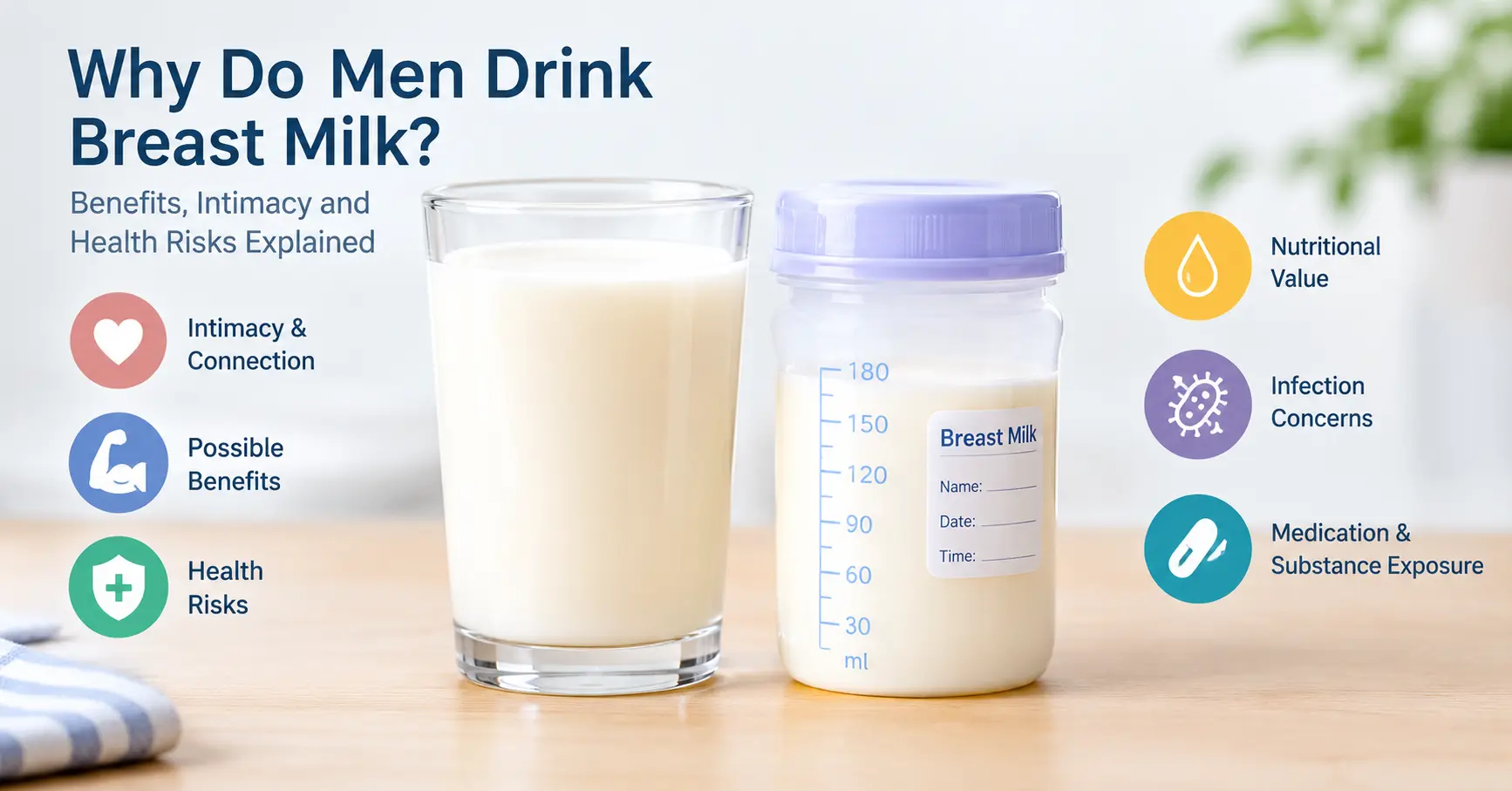
Why Do Men Drink Breast Milk? Benefits and Risks
Why do some men drink women’s breast milk? The reasons vary. For some couples, it is a personal form of intimacy or curiosity. Others are interested in its taste, while some believe it offers nutritional, immune-boosting, or fitness benefits.
But what does medical evidence actually say?
Human breast milk contains nutrients and biologically active substances that support infant development. However, there is no strong clinical evidence that drinking breast milk provides special health benefits to adult men, such as building muscle, improving sexual performance, or preventing disease. Research has also raised concerns about consuming unpasteurized milk from unknown or unregulated sources.
Whether the practice is appropriate depends on consent, the health of the lactating person, the source and handling of the milk, and the circumstances of consumption.
This guide explains the possible reasons, the evidence behind commonly claimed benefits, and the health considerations adults should understand.
Table of Contents
Why Do Men Drink Women’s Breast Milk?
There is no single explanation for why a man might consume breast milk. Personal preference, relationship dynamics, curiosity, and beliefs about nutrition can all influence the decision.
1. Intimacy Between Partners
Some couples incorporate breast milk consumption into their intimate lives, particularly when one partner is breastfeeding or producing milk.
For them, it may be connected to physical closeness, affection, trust, or the experience of sharing something personal. Direct breastfeeding between consenting adults may also be part of a couple’s preferred intimate activities.
There is nothing inherently unhealthy about a consensual adult preference simply because it is uncommon. However, both partners should feel comfortable discussing their boundaries, and neither should feel pressured.
Breastfeeding and sexuality do not mean the same thing to everyone. Some lactating women enjoy nipple stimulation, while others find it uncomfortable, tiring, or unrelated to sexual intimacy.
2. Curiosity About Taste and Texture
Some adults are curious about the taste of human milk. Its flavor and composition can vary with factors such as the stage of lactation and individual differences.
Curiosity alone does not necessarily indicate a particular sexual preference or medical concern. People’s motivations differ, and it is not possible to infer someone’s intentions from this behavior alone.
Any tasting or consumption should be voluntary and should not interfere with the feeding needs of a nursing infant.
3. Sexual Preferences and Adult Nursing
For some adults, breast milk consumption is connected to sexual preference or nipple stimulation. Others experience it primarily as a nurturing or affectionate activity rather than a sexual one.
These experiences should not be treated as interchangeable. A behavior that one person finds intimate may feel uncomfortable to another.
The important considerations are informed consent, communication, personal boundaries, and physical comfort. A partner who is breastfeeding does not automatically consent to sexual contact with their breasts or to sharing milk.
Guidance from La Leche League International explains that breastfeeding and the postpartum period can affect sexual desire and physical comfort differently from person to person.
4. Beliefs About Nutrition and Fitness
Some men consume breast milk because they believe it contains special nutrients or substances that could improve recovery, muscle growth, immunity, or general health.
Human milk does contain proteins, fats, carbohydrates, and other biologically active components. Nevertheless, the fact that a substance supports infant development does not prove that consuming it offers comparable benefits to adults.
A review published in the Journal of the Royal Society of Medicine examined claims surrounding adult breast milk consumption and found no clinical evidence supporting the claimed medicinal benefits of directly drinking human milk. The authors also highlighted risks associated with milk purchased through unregulated online markets.
Read the research: More Than a Lucrative Liquid: The Risks for Adult Consumers of Human Breast Milk Bought From the Online Market.
Are There Benefits of Drinking Breast Milk for Men?
The answer depends on what is meant by “benefits.” Breast milk contains nutrients, but that does not establish that it is a particularly effective food or treatment for adult men.
Does Breast Milk Improve Immunity?
Human milk contains antibodies and other components involved in infant immune development. These properties are important in the context of breastfeeding.
However, there is insufficient clinical evidence that adults gain a meaningful immune-system advantage from drinking breast milk. Research into individual milk components does not establish that consuming whole milk prevents infections or strengthens immunity in adults.
People should not use breast milk as a replacement for vaccination, prescribed treatment, a balanced diet, or medically recommended preventive care.
Can Breast Milk Help Build Muscle?
There is no reliable clinical evidence showing that drinking breast milk improves muscle growth or athletic performance in adult men.
Muscle development depends on factors such as resistance training, adequate total energy intake, sufficient protein, recovery, and sleep.
Breast milk is designed to meet the nutritional needs of infants. It is not established as a superior protein source for adults, and the 2015 review noted that human milk contains less protein than cow’s milk.
For fitness goals, adults are generally better served by an appropriate diet and evidence-based nutritional guidance than by relying on breast milk.
Can Breast Milk Improve Sexual Performance?
Claims that breast milk improves erections, libido, testosterone levels, or sexual stamina are not supported by strong clinical evidence.
There is no established medical basis for using human breast milk as a treatment for erectile dysfunction or other sexual health problems.
Persistent erection difficulties or reduced sexual desire can have many causes, including cardiovascular disease, diabetes, stress, medication effects, and hormonal conditions. A qualified healthcare professional can help identify the cause and recommend appropriate treatment.
Does Breast Milk Have Nutritional Value for Adults?
Yes, human milk contains nutrients and provides energy. However, nutritional value is not the same as a proven health advantage.
For most adults, there is no demonstrated reason to choose breast milk over a balanced diet that already provides sufficient energy, protein, fats, vitamins, and minerals.
Key takeaway: Breast milk is valuable for infant nutrition, but claims that adult men can use it as a superfood or medical treatment remain unproven.
Health Risks of Drinking Women’s Breast Milk
The level of risk depends heavily on where the milk comes from, whether it has been handled hygienically, and whether relevant health concerns are present.
1. Bacterial Contamination
Human milk can become contaminated during collection, storage, transportation, or handling. Unpasteurized milk from an unknown source may contain harmful microorganisms.
A 2015 study reviewed the online market for human milk and discussed contamination risks related to unsanitary pumping equipment, poor storage practices, and transportation. The researchers reported substantial bacterial contamination in samples examined in earlier research.
These findings concern the samples studied, particularly milk obtained through informal online channels. They should not be interpreted as evidence that all human milk is contaminated.
Possible effects of consuming contaminated milk include gastrointestinal illness, nausea, vomiting, diarrhea, and abdominal discomfort.
2. Infection Transmission
Milk from a person with certain infections can present a transmission concern. The risk varies according to the infection, the source’s health status, the route of exposure, and whether blood or open sores are involved.
For example, HIV.gov’s guidance on HIV transmission identifies breast milk as a body fluid that can transmit HIV under relevant exposure conditions. This does not mean that every contact with breast milk causes infection, and general transmission guidance does not provide a precise risk estimate for every adult-consumption scenario.
If a source has a known transmissible infection, if blood is visible in the milk, or if exposure involves oral wounds or sores, seek individualized medical advice rather than assuming the exposure is harmless.
Milk obtained from an unknown donor also creates uncertainty about infection status and handling conditions.
3. Medication and Substance Exposure
Some substances taken by a lactating person can pass into breast milk. These may include prescription medicines, certain nonprescription medicines, alcohol, and cannabis-related compounds.
The amount transferred and the potential effect depend on the specific substance, dose, timing, and other factors. A medicine that is compatible with breastfeeding an infant is not automatically proven harmless for every adult who consumes the milk, although adult exposure and infant exposure are not equivalent.
The NHS guidance on breastfeeding and medicines explains that medicines can pass into milk and that suitability varies by drug. The CDC’s breastfeeding guidance on alcohol and cannabis also discusses substance exposure through milk.
Do not assume that breast milk is free from medication or chemical residues simply because it is natural. If there are concerns about a particular medicine or substance, a healthcare professional can help assess the situation.
4. Risks From Buying Breast Milk Online
Purchasing breast milk from an unknown online seller is different from consuming milk from a known, healthy partner under hygienic conditions.
Informal online markets may lack reliable screening, controlled storage, or traceable handling procedures. Labels and sellers’ assurances do not necessarily verify a product’s contents or safety.
A peer-reviewed article published in the Journal of the Royal Society of Medicine specifically cautioned against adult consumption of milk purchased through unregulated online markets because of bacterial contamination and potential infectious risks.
Do not assume that breast milk sold online is tested or pasteurized. If human milk is being considered for a medical purpose, discuss appropriate options with a healthcare professional or an accredited milk bank. Donor milk banks generally prioritize infants who need medically appropriate human milk.
5. Allergies and Digestive Problems
As with other foods, individual tolerance varies. Contaminated milk may cause digestive symptoms, while any person who experiences an unexpected reaction after consuming it should stop and seek medical advice if symptoms persist or are severe.
The more clearly established concerns in adult breast milk consumption are related to unverified health claims and the risks of contaminated or improperly handled milk.
Is It Safe for a Man to Drink His Partner’s Breast Milk?
There is no universal answer that applies to every person and every situation.
For healthy adults, consuming a small amount of freshly expressed milk from a known source under hygienic conditions is a different situation from drinking raw milk purchased from an unknown seller. However, hygiene alone cannot answer every question about infection status, medicines, or other potential exposures.
Before considering consumption, adults should think about the following:
- Consent: Both partners must freely agree. Breastfeeding or lactation does not imply consent to adult nursing.
- Milk source: Avoid milk from unknown or unverified sources, especially when its handling history is unclear.
- Health status: Consider relevant infections, blood in the milk, and any known medical concerns.
- Medication and substances: A lactating person’s medicines and substance use may be relevant to exposure.
- Infant feeding: An infant’s nutritional needs should take priority, and adult consumption should not interfere with feeding plans.
- Physical comfort: Stop if breastfeeding or nipple stimulation causes pain, irritation, or distress.
If there is a known infection risk or a specific medical concern, consult a healthcare professional before proceeding.
Can Drinking Breast Milk Affect a Breastfeeding Woman?
The effect depends on the circumstances. Direct nursing or expressing milk removes milk from the breasts, and milk production responds to milk removal. The practical effect on supply varies with the person’s lactation pattern and feeding routine.
The most important issue is ensuring that the infant continues to receive the milk or other feeding recommended for their needs. A lactating person’s comfort, consent, and health matter just as much as the preferences of their partner.
Breastfeeding can also bring changes in desire, sensitivity, and physical comfort. Some people enjoy breast stimulation, while others do not. Neither response should be treated as an obligation or as proof of a particular attitude toward sex.
Communication is especially important during the postpartum period, when recovery, sleep deprivation, and hormonal changes may affect intimacy.
Myths and Facts About Men Drinking Breast Milk
| Common claim | What the evidence says |
|---|---|
| Breast milk automatically boosts adult immunity | Special immune benefits for adult consumers have not been established clinically. |
| Breast milk builds muscle faster | There is no strong clinical evidence supporting this claim. |
| Breast milk treats erectile dysfunction | It is not an established treatment for erectile dysfunction. |
| Natural milk is always safe | Contamination, infection, and substance exposure can still be concerns. |
| Every man who drinks breast milk has a sexual fetish | Motivations vary and cannot be determined from the behavior alone. |
| Drinking breast milk is always dangerous | Risk depends on the source, handling, health status, and circumstances; the risks are not identical in every case. |
| A partner’s breast milk can replace a balanced adult diet | It is not a proven substitute for appropriate adult nutrition. |
When Should Someone Seek Medical Advice?
Seek medical advice if symptoms develop after consuming milk from an uncertain source, especially persistent vomiting, diarrhea, fever, or signs of dehydration.
Seek prompt professional advice after a potentially significant exposure involving a known infection, visible blood, or open sores. Do not wait for symptoms if you believe you may have had a meaningful exposure to HIV or another infection: time-sensitive assessment may be important.
If a person has questions about a particular medicine, infection, or health condition, advice should be based on that specific circumstance rather than on general claims about breast milk.
Frequently Asked Questions
1. Why do some men like drinking women’s breast milk?
Reasons can include curiosity, affection, intimate preferences, nipple stimulation, or beliefs about nutrition. Not every man has the same motivation, and consumption does not automatically indicate a sexual fetish.
2. Is breast milk healthy for adult men?
Breast milk contains nutrients, but there is no strong clinical evidence that drinking it gives adult men special benefits such as improved immunity, increased muscle growth, or better sexual performance. A balanced diet is a more established way to meet adult nutritional needs.
3. Can a man get an infection from drinking breast milk?
It is possible for milk to carry infectious agents under certain circumstances. Risk depends on the source’s health status, the infection involved, milk handling, and the route of exposure. Milk from unverified sources carries additional uncertainty.
4. Is it safe to drink breast milk directly from a partner?
Safety cannot be guaranteed in every case. Consent, relevant infection risks, medication and substance exposure, hygiene, physical comfort, and the infant’s feeding needs all matter. Known health concerns should be discussed with a qualified healthcare professional.
5. Does breast milk increase testosterone or sexual stamina?
There is no reliable clinical evidence that drinking breast milk increases testosterone or improves sexual stamina. Men experiencing persistent sexual health concerns should seek an appropriate medical evaluation rather than relying on unsupported remedies.
6. Is buying breast milk online safe?
Milk sold through informal online markets may not have verified screening, hygienic collection, or safe storage. Research published in the Journal of the Royal Society of Medicine has highlighted these risks. Do not assume that online milk is tested or safe to consume.
Conclusion
Men may drink women’s breast milk for many reasons, including intimacy, curiosity, personal preference, or beliefs about its nutritional value. When adults are involved, consent and mutual comfort are essential.
The medical evidence does not establish special benefits for adult men in areas such as muscle growth, immunity, or sexual performance. The main health concerns involve contaminated milk, unknown infection status, and potential exposure to medicines or other substances—particularly when milk comes from an unverified source.
The most sensible approach is to separate personal preferences from medical claims. Respectful communication, hygienic handling, attention to health risks, and advice from a qualified healthcare professional are more reliable than treating breast milk as a miracle food.
More Info About Kpopbio