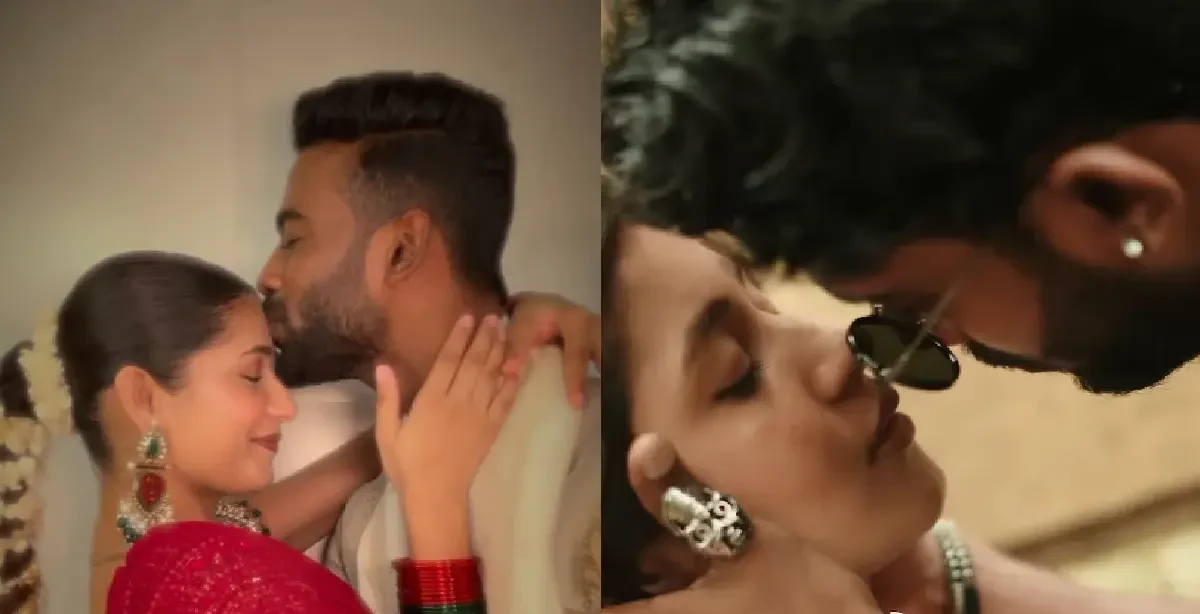
Justin D’Cruz and Sakshi Shrivas Caught in Viral MMS Controversy: The Truth Behind the Viral Claims
The names Justin D’Cruz and Sakshi Shrivas attracted widespread attention after social media posts began describing a video featuring the reality television personalities as an alleged leaked MMS. The discussion spread across social platforms, with some accounts using sensational captions and encouraging viewers to search for a supposed full video. However, the couple publicly disputed these claims, explaining that the circulating footage was taken from one of their vlogs rather than a leaked private recording. Reports published in early January 2026 covered their response and their request for people to stop spreading the misleading story.
The incident highlights a recurring problem in the digital entertainment world: an ordinary video can quickly become the centre of a controversy when users attach misleading descriptions to it. In the age of viral reels, short clips often travel much faster than explanations, allowing speculation to spread before viewers understand the original context. For celebrities and influencers, this can mean dealing with rumours that affect their personal lives and reputations. In this case, the most important detail is that Justin and Sakshi denied the alleged MMS claims, and reporting identified the circulating clip as a segment from their vlog. Readers should distinguish those reported facts from unsupported claims made by accounts seeking attention.
Table of Contents
What Is the Justin D’Cruz and Sakshi Shrivas Viral MMS Controversy?
The controversy began when a short video featuring Justin D’Cruz and Sakshi Shrivas started circulating online with claims that it showed a leaked MMS. The footage reportedly showed Justin without a shirt while casually talking with Sakshi, a scene that was subsequently presented by some social media users in a misleading way. As the clip gained attention, users began asking for links to the supposed private recording, while other posts used the controversy as a way to attract views and engagement.
This created confusion between the original footage and the story being told about it. Media coverage published on January 2, 2026, reported that Justin and Sakshi had responded to the rumours and challenged the claims being made about the video.
It is important to understand that a viral label does not prove a video’s authenticity. A post may use words such as leaked, exclusive, or full video without providing reliable evidence for its claims. Sometimes, the same clip is reposted by numerous accounts, each adding a more dramatic headline to encourage people to click. Once that happens, the number of posts can create the impression that a claim has been independently verified, even when every post traces back to the same misleading source.
In the Justin and Sakshi case, their own clarification directly challenged the alleged leak narrative. Readers looking for accurate information should therefore focus on the couple’s response and reliable reporting instead of anonymous accounts promoting supposed video links.
How the Viral Clip Started Circulating
According to reports, the clip that triggered the controversy was taken from a vlog featuring Justin and Sakshi. It was subsequently circulated with captions suggesting that it was an MMS leak, changing how viewers interpreted an otherwise ordinary moment. The distinction matters because the meaning of a video depends on its original context, not simply on the words attached to a repost. When someone removes a clip from its original setting, adds a provocative caption, and shares it across several platforms, viewers may draw conclusions that the footage does not support. Reporting by Mid-day and Moneycontrol described the couple’s explanation that the circulating footage came from their vlog rather than a leaked MMS.
This pattern is not limited to reality television personalities. Online creators, actors, musicians, and ordinary social media users can all become targets of misleading claims. A short video may be cropped, reposted, or paired with a fabricated description to create a more sensational story. Users who encounter the repost later may have no idea where the footage first appeared, making it harder to separate fact from speculation. That is why checking the source and looking for an original upload are important steps before accepting a viral claim. In this instance, the couple’s clarification provided an important piece of context that challenged the narrative spreading around their names.
Why Social Media Users Became Curious
Viral controversies often attract attention because they combine familiar personalities with an element of mystery. When a post claims that a private video has surfaced, some users become curious about whether the story is genuine, while others search for more information because they have already seen multiple posts about it. Sensational wording can intensify that curiosity by suggesting that an important detail is being hidden from the public. This creates an environment in which people may click on links or share posts before checking whether the claims are accurate. The Justin and Sakshi controversy illustrates how a misleading label can become a story in its own right, even when the people involved dispute the allegation.
Social media algorithms can also contribute to the spread of controversial content. Posts that receive comments, shares, and repeated clicks may continue reaching new audiences, regardless of whether the information they contain is reliable. As a result, a misleading post can sometimes receive more attention than a careful explanation. This does not mean that every person sharing a post intends to cause harm; some may simply be repeating information they believe to be true. Nevertheless, the consequences can be serious when a rumour involves someone’s private life or reputation. Taking a moment to check the facts can help prevent curiosity from turning into the unnecessary spread of misinformation.
Justin D’Cruz Breaks His Silence
Justin D’Cruz responded publicly after the alleged MMS claims began circulating. According to coverage published by Mid-day, Moneycontrol, and Free Press Journal in January 2026, he rejected the claim that the video was a leak and explained that the footage was taken from one of the couple’s vlogs. He also expressed frustration that people were requesting links to the supposed MMS instead of checking whether the story was true. His response challenged the way the video had been presented online and urged viewers not to believe the rumours.
The clarification was significant because it addressed the central claim directly. Rather than allowing the rumour to circulate without comment, Justin explained the context of the footage and criticised the behaviour of accounts spreading misleading information. The response also highlighted the difference between a publicly available vlog and a supposedly leaked private recording. Those are not interchangeable categories, and presenting one as the other can mislead audiences. When a person featured in a viral post provides a direct clarification, readers should consider that statement alongside credible reporting rather than automatically accepting claims made by anonymous accounts.
His Explanation About the Viral Video
In the clarification reported by media outlets, Justin described the alleged MMS claim as false and said the clip came from one of their vlogs. He also questioned why users were asking for links to supposed leaked footage when the story being circulated did not accurately represent the original video. His response reflected frustration with the attention being given to a misleading claim. Instead of confirming the rumour, he rejected its premise and encouraged people to stop treating the circulating clip as a private leak. This distinction is central to understanding the controversy and should remain clear in any discussion of the incident.
The incident also demonstrates why statements from the people directly involved can be important when assessing online allegations. Viral posts may be written by anonymous accounts, and their captions may not accurately describe the footage. A direct response does not remove the need for careful reporting, but it gives audiences relevant information about the clip’s origin and how the people featured in it understand the situation. In this case, the reported explanation was that the footage originated in a vlog, not in a leaked MMS. Responsible coverage should preserve that distinction instead of repeating the original allegation as if it were established fact.
The Couple’s Message to Fans
Sakshi Shrivas also supported the clarification, and reports described the couple as asking users to stop sharing the misleading claims. Their message challenged the suggestion that a hidden video existed and called attention to the way an ordinary vlog clip had been presented online. The response was aimed not only at people who had created the misleading posts but also at viewers who continued sharing them or requesting supposed links. By addressing the issue publicly, the couple sought to correct the narrative and discourage further circulation of the rumour.
For fans, the most helpful response is to avoid adding momentum to a claim that the people involved have disputed. Sharing a sensational post, even to criticise it, can sometimes increase its reach. Reposting screenshots or repeating an unverified allegation may also expose more people to misleading content. A better approach is to rely on credible coverage, share the clarification when useful, and avoid links that promise access to private material. Supporting a creator does not require investigating every rumour about their personal life. Sometimes, respecting a public figure means allowing them the same privacy and dignity that anyone else should expect.
Who Are Justin D’Cruz and Sakshi Shrivas?
Justin D’Cruz and Sakshi Shrivas are Indian reality television personalities and digital content creators who became known to a wider audience through their appearance on MTV’s Splitsvilla X4. Their relationship and on-screen chemistry attracted viewers who followed their journey beyond the show. Over time, their presence on social media helped them maintain a connection with fans interested in their daily lives, personal updates, and online content. Like many reality television personalities, they have had to navigate the challenges of being recognised not only for their professional activities but also for their personal relationships. The viral MMS controversy brought renewed attention to their names, although the discussion focused on an allegation they publicly disputed rather than a new professional achievement.
The episode also illustrates a challenge faced by public figures in the digital age. When a creator shares a vlog, the original footage may later be copied and circulated by other accounts without its original context. Once a misleading caption becomes attached to that footage, audiences may associate the creator with a story that the video itself does not establish. Public recognition can make the situation more difficult because a familiar name attracts clicks, comments, and speculation. Justin and Sakshi’s experience demonstrates why audiences should separate a person’s public profile from unverified claims about their private life.
Their Connection With MTV Splitsvilla X4
MTV Splitsvilla X4 introduced Justin D’Cruz and Sakshi Shrivas to viewers interested in reality television, relationships, and entertainment personalities. The programme gave audiences an opportunity to follow contestants through a format built around connections, challenges, and interpersonal dynamics. For some viewers, the relationships that develop during reality shows become a reason to continue following the contestants after the season ends. Social media then provides a way for fans to see updates, watch videos, and follow the personalities they first encountered on television.
Justin and Sakshi’s connection continued to attract interest after their appearance on the programme. Their online presence meant that fans could encounter them outside the original television format, including through casual videos and lifestyle content. However, popularity also brings greater exposure to misleading posts and online speculation. A rumour involving recognisable reality television personalities may spread rapidly because audiences already know their names and want to understand what has happened. In this case, the association with Splitsvilla X4 helped the story attract attention, but it did not make the alleged MMS claims accurate. Their reported clarification remains the key detail readers should consider when discussing the controversy.
Their Journey as Digital Content Creators
For many reality television personalities, social media becomes an important part of their professional lives. Platforms such as Instagram and YouTube allow creators to share lifestyle videos, personal updates, travel experiences, and moments from their everyday routines. This type of content helps audiences develop a connection with creators beyond a television programme. It also gives creators greater control over how they present themselves, although that control can be weakened when other accounts download, edit, or repost their material without permission or context.
The controversy involving Justin and Sakshi highlights how the same content that helps creators connect with audiences can later be misrepresented. A casual moment from a vlog may look different when separated from the complete video and paired with a sensational headline. Viewers who encounter only the shortened version may never see the original context. This is why creators and audiences alike benefit from checking original uploads before believing claims about viral footage. In the couple’s case, media reports attributed the circulating clip to their vlog, challenging the suggestion that it was a leaked MMS. The incident serves as a reminder that online popularity does not eliminate a person’s right to privacy or protection from misleading allegations.
How Clickbait and Online Rumours Spread
Clickbait is content designed primarily to attract attention and encourage users to click, often by using exaggerated or emotionally charged language. In entertainment reporting, this may involve dramatic headlines, incomplete information, or claims that promise an exclusive revelation. A headline suggesting that a celebrity’s private video has leaked can generate curiosity even when the underlying evidence is weak or nonexistent. Some accounts exploit this curiosity by asking users to comment, send a direct message, or follow another profile to obtain a supposed link. The result can be a cycle in which the rumour becomes increasingly visible without becoming any more credible.
The Justin and Sakshi controversy demonstrates why the wording attached to a video matters. According to reporting about their clarification, the circulating clip was presented as a leaked MMS even though the couple said it came from a vlog. That change in framing helped transform ordinary footage into a subject of online speculation. Once people began repeating the claim, subsequent users could mistake its popularity for proof. Yet thousands of comments or repeated posts cannot establish whether an allegation is true. Readers should ask who originally published the material, whether the complete footage is available from a legitimate source, and whether reliable reporting supports the claim. These simple checks can help prevent misleading entertainment stories from gaining unnecessary momentum.
Misleading Captions and Fake Links
A misleading caption can change how viewers interpret an otherwise ordinary video. For example, footage from a public vlog may be reposted with a headline implying that it came from a private recording. The caption creates a story before the viewer has had an opportunity to examine the original source. When the same material is copied across several accounts, the repeated description can appear authoritative even if nobody has independently verified it. This is one reason sensational video claims require careful scrutiny rather than immediate acceptance.
Links promoting supposed leaked videos can create additional risks. Some may redirect users to unrelated websites, misleading advertisements, suspicious downloads, or pages designed to collect personal information. Others may demand that visitors complete surveys, install applications, or share the link with friends before supposedly revealing the content. These tactics can turn a celebrity rumour into a way of generating traffic or exposing users to online scams. It is therefore unwise to click on unknown links simply because they promise access to a trending video. In the Justin and Sakshi case, the couple’s reported clarification challenged the existence of the alleged leaked MMS, making links promoted under that description particularly questionable.
The Role of Instagram and Telegram
Instagram and Telegram are among the platforms where users may encounter discussions about trending videos and entertainment controversies. Instagram’s short-form content can help a clip reach new audiences quickly, while Telegram channels and groups can circulate links and reposted material. These platforms have legitimate uses, but their ability to distribute content rapidly can also be exploited by accounts that publish unverified allegations. A clip may move from one platform to another, accumulating new captions and claims as it spreads.
The important distinction is that a platform’s presence in a rumour does not establish the truth of that rumour. A video shared repeatedly on Instagram or promoted through a Telegram channel is not automatically authentic. View counts, comments, and reposts measure engagement, not accuracy. In the Justin and Sakshi incident, the existence of widespread discussion did not prove that a private MMS had been leaked. The couple’s explanation, as reported by several media outlets, was that the clip originated from their vlog. Readers should therefore avoid treating viral activity as a substitute for verification and should report accounts that impersonate creators, distribute harmful material, or deliberately mislead audiences.
Is the Alleged MMS Video Real?
The central question surrounding the controversy is whether the video was genuinely a leaked private recording. Based on reporting published in early January 2026, Justin D’Cruz and Sakshi Shrivas denied the alleged MMS claims and explained that the circulating clip came from one of their vlogs. Their clarification directly challenged the narrative promoted by social media posts describing the footage as a leak. Reports from Mid-day, Moneycontrol, and Free Press Journal covered their response and the misleading way the clip had been presented. The available reporting therefore supports describing the incident as a disputed viral MMS rumour, not as a confirmed private-video leak.
Readers should also be cautious about claims involving a supposedly longer or hidden version of the clip. An account may promise an extended video to attract clicks, but the existence of such a link does not establish that the promised material exists or that it involves the named individuals. Repeating the claim without evidence risks giving an unsupported allegation additional credibility. The responsible approach is to describe what has been reported, identify the couple’s denial, and avoid suggesting that an unverified recording is genuine. If new information emerges, it should be assessed through credible reporting and direct statements rather than anonymous posts or recycled screenshots.
What the Available Reporting Actually Confirms
The available reports establish several important points. First, a clip featuring Justin and Sakshi circulated online and was labelled by some users as an alleged leaked MMS. Second, Justin publicly rejected that description and said the footage came from one of their vlogs. Third, reporting stated that Sakshi supported the clarification and that the couple urged people to stop spreading the misleading claims. These points provide a factual foundation for an article about the controversy without treating the allegation itself as proven.
What readers should not do is turn the rumour into a stronger claim than the evidence supports. A headline may describe the couple as having been caught in an MMS controversy, but that wording must not imply that a private video was confirmed to exist. The distinction between being the subject of a rumour and being involved in a verified leak is significant. The first describes an online controversy; the second asserts an event that requires evidence. Responsible entertainment coverage should preserve this difference throughout the headline, introduction, and article body. That approach is not only more accurate but also fairer to the people whose names have become associated with the story.
Privacy, Digital Safety, and Responsible Sharing
Viral controversies often reveal how easily online attention can cross the line between entertainment and personal harm. Public figures choose to share some parts of their lives with audiences, but that does not mean every claim about their private lives deserves to be circulated. When a video is misrepresented, repeated sharing can expose people to unwanted scrutiny and make it difficult for them to correct the record. The same behaviour can affect ordinary individuals who lack the public profile or resources to respond to a rumour. Respecting privacy is therefore important whether the people involved are celebrities, influencers, or private citizens.
There are practical steps that readers can take when they encounter an alleged leaked video. Instead of immediately forwarding the post, check whether the person involved has issued a statement and whether reputable news organisations have reported the same facts. Avoid clicking on suspicious links, downloading unknown files, or providing personal information to access supposed footage. If the content appears to violate someone’s privacy, do not repost it, even if the intention is to criticise the original uploader. Use the platform’s reporting tools when appropriate, and share verified information that corrects the misleading claim. These actions can reduce the reach of harmful rumours while helping audiences stay safer online.
The incident also offers a lesson for entertainment websites and SEO writers. Sensational headlines may attract short-term attention, but accuracy should remain the priority. An article that repeats an unverified allegation can unintentionally strengthen the rumour it is trying to explain. By contrast, a fact-based report can answer readers’ questions while clearly identifying what the people involved have said and what remains unverified. Writers should avoid linking to alleged private material, using fabricated descriptions, or suggesting that readers can access a hidden video. Search visibility is valuable, but it should never come at the expense of a person’s privacy, dignity, or reputation.
Conclusion
The Justin D’Cruz and Sakshi Shrivas viral MMS controversy shows how quickly an online rumour can develop when a short video is presented without its original context. After a clip featuring the couple circulated with claims that it was a leaked MMS, Justin publicly rejected the allegation and explained that the footage came from one of their vlogs. Media reports also described Sakshi’s support for the clarification and the couple’s request that people stop spreading the misleading claims. The available reporting does not support presenting the alleged leak as a confirmed event.
For readers, the key lesson is simple: viral does not mean verified. Before believing or sharing a sensational claim, check the original source, look for credible reporting, and consider the privacy of the people involved. Misleading captions and suspicious links can turn ordinary content into a damaging rumour, but responsible users can help prevent that cycle from continuing. In the end, the most useful way to understand this controversy is to focus on the couple’s clarification rather than the speculation that made the clip trend in the first place.
Frequently Asked Questions (FAQs)
1. Is the Justin D’Cruz and Sakshi Shrivas viral MMS video real?
Justin D’Cruz and Sakshi Shrivas denied the alleged MMS claims. According to media reports published in January 2026, Justin explained that the circulating clip was taken from one of their vlogs rather than being a leaked private recording. The allegation should not be presented as a confirmed leak.
2. What did Justin D’Cruz say about the viral video?
Justin rejected the leaked-MMS claims and explained that the clip came from one of the couple’s vlogs. He also criticised the spread of misleading posts and urged people not to believe or share the rumour. His response challenged the description being used by social media accounts.
3. Are Justin D’Cruz and Sakshi Shrivas associated with MTV Splitsvilla X4?
Yes. Justin D’Cruz and Sakshi Shrivas are known for their appearance on MTV Splitsvilla X4. Their connection continued to attract attention through social media and digital content after the show.
4. Where did the viral clip reportedly come from?
According to the couple’s reported clarification, the clip came from one of their vlogs. It was subsequently circulated with captions suggesting that it was a leaked MMS, which they disputed. Readers should consult credible reporting rather than rely on reposted clips or anonymous claims.
5. Should people click on or share links claiming to contain the alleged video?
No. Avoid suspicious links and do not circulate unverified claims about private recordings. Such links may lead to scams, misleading websites, or unsafe downloads, while sharing the allegation can contribute to harassment and reputational harm. Check credible sources and respect the privacy of the people involved.
More Info About Kpopbio.com