
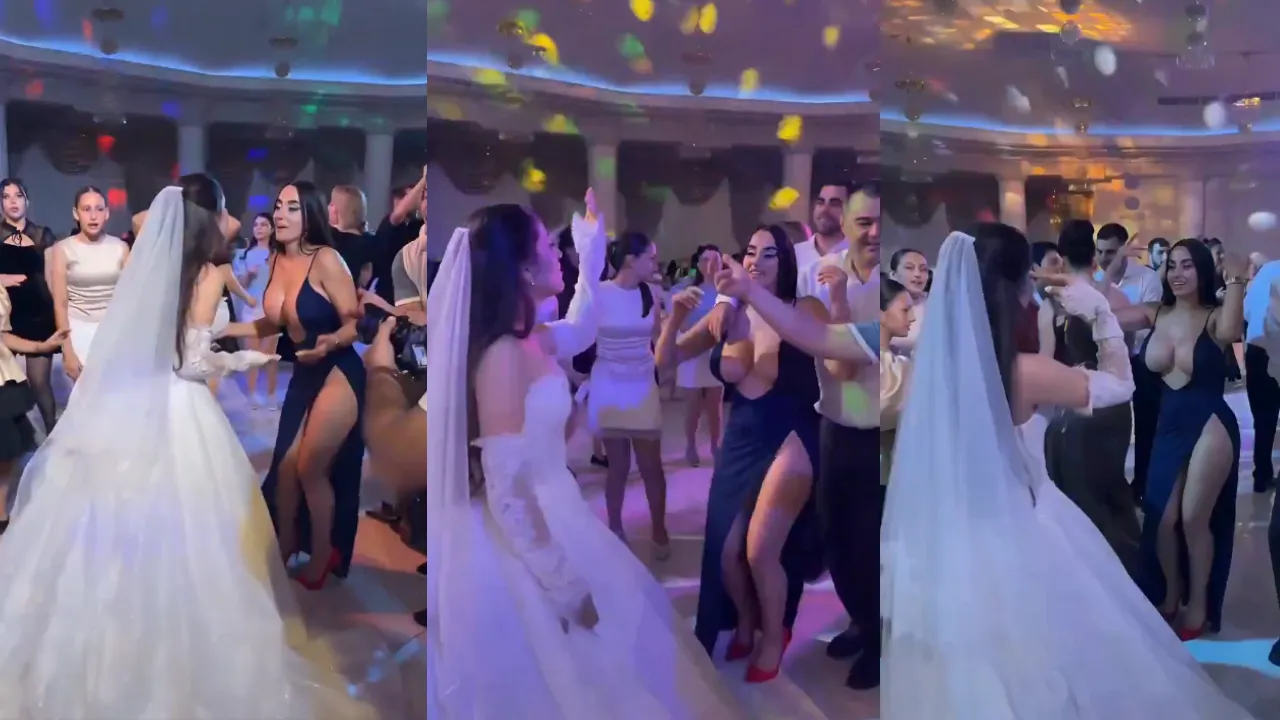
Saudi Arabia Wedding Guest Dress Controversy: Bold Neckline Sparks Online Debate
A wedding is usually a time for celebration, beautiful outfits, family gatherings, and unforgettable memories. However, in the age of social media, even a single fashion choice can become a topic of public discussion. A dramatic neckline, an unusual dress design, or an outfit that challenges traditional expectations can quickly attract attention and divide opinions. This is particularly interesting when a fashion moment takes place at a wedding in a country with distinctive cultural traditions, such as Saudi Arabia.
The Saudi Arabia wedding guest dress controversy is a subject that brings together celebrity fashion, personal expression, cultural expectations, and the influence of online platforms. One relevant documented example involves Lebanese singer Najwa Karam, whose unusual black gown attracted attention after she performed at a private wedding in Riyadh in November 2024. Fashion publication Hia reported on the gown’s distinctive geometric neckline and the public comments surrounding the design. An earlier example involved singer Layla Iskandar, whose plunging-neckline dress at a wedding in Taif also drew attention in 2018.
It is important to distinguish these documented incidents from a newly reported event. Available reporting does not establish a separate, verified 2026 incident matching this exact headline. Nevertheless, these earlier examples help explain why wedding fashion can become a broader conversation about dress expectations, cultural identity, and individual style. Understanding the discussion requires looking beyond the dress itself and examining the different perspectives people bring to it.
What Happened in the Saudi Arabia Wedding Dress Controversy?
The discussion surrounding bold wedding fashion in Saudi Arabia is not simply about whether a dress is beautiful or unattractive. It often involves different ideas about what is appropriate for a formal family celebration, how celebrities should present themselves, and whether personal style should follow traditional expectations. A design that looks artistic and sophisticated to one person may appear too revealing or unconventional to another. This difference in interpretation is one reason fashion-related stories can generate attention even when no major incident has taken place.
One documented example appeared in November 2024, when Hia reported on Lebanese singer Najwa Karam’s appearance at a private wedding in Riyadh. Her black gown, designed by Lebanese fashion designer Nicolas Jebran, featured an unusual crown-inspired neckline with pointed geometric details. The publication described the design as distinctive and reported that it attracted comments on social media.
Another earlier report, published by Lebanon24 in November 2018, covered singer Layla Iskandar’s appearance at a wedding event in Taif. She wore a dark gray, floor-length dress featuring a deep V-shaped neckline, which attracted attention online.
These cases demonstrate a recurring pattern: an outfit worn at a Saudi wedding-related event can become a wider fashion discussion. However, they should not be treated as one incident, and neither example proves that every bold neckline will lead to controversy. The reaction depends on the setting, the design, the audience, and how the images are shared and interpreted.
Najwa Karam’s Black Gown at a Riyadh Wedding
Najwa Karam’s appearance offers a useful example of how an individual design feature can capture public attention. According to Hia’s report dated November 25, 2024, the Lebanese singer performed at a private wedding in Riyadh wearing a black velvet gown created by Nicolas Jebran. The garment featured a sharply shaped neckline with pointed edges at the front and back, giving the upper part of the gown a crown-like appearance. A fitted silhouette, a flowing mermaid-style skirt, and a decorative accessory at the waist completed the look.
The interesting detail is that the dress was not simply a conventional gown with a low neckline. Its unusual geometry made the neckline part of the overall artistic design. Rather than relying only on color or embroidery to attract attention, the dress used its sharp, architectural lines to create a dramatic silhouette. The design illustrates how a neckline can influence the entire visual character of a garment.
Hia also compared the outfit with a similar black design worn by Egyptian actress Mirihan Hussein at the Cairo International Film Festival shortly before Karam’s appearance. This comparison placed the discussion within a wider conversation about unconventional celebrity fashion rather than limiting it to the question of modesty.
For readers searching for a Saudi Arabia wedding dress controversy, this is an important distinction. The documented story concerns a celebrity performing at a wedding, not a verified report about an unidentified ordinary guest being removed from an event or facing official consequences. Accurate reporting helps readers understand what actually happened instead of turning a fashion discussion into an unsupported scandal.
Why Did the Bold Neckline Become the Main Talking Point?
Necklines have always played an important role in formal fashion. A high neckline can communicate restraint and timeless elegance, while a plunging V-neck, off-the-shoulder cut, or geometric collar can create a more dramatic effect. Designers use these details to shape the upper body, establish visual balance, and give a garment a recognizable identity. At a formal event, the neckline often becomes one of the first details people notice because it frames the face and determines how the rest of the outfit appears.
In the case of Najwa Karam’s gown, the unusual construction was central to its visual impact. The sharply pointed shape created a strong outline that differed from a traditional rounded, sweetheart, or simple V-shaped neckline. This made the garment memorable, but it also left room for different interpretations. Some viewers could see the silhouette as a confident example of modern couture, while others could regard it as an unnecessarily dramatic choice for a wedding setting.
There is also an important difference between a neckline that is revealing and one that is visually unconventional. A dress can have a relatively covered bodice but still look daring because of its shape. Conversely, a simple low neckline may attract little attention in an environment where evening gowns are common. In other words, controversy does not always arise from how much skin an outfit reveals; sometimes it comes from how far the design departs from familiar expectations.
Photography adds another layer to the discussion. A dress may look balanced when seen from the front in person but appear more dramatic in a tightly cropped photograph or from an unusual camera angle. Lighting, posture, editing, and the choice of image can all influence how people perceive an outfit. Once a single image becomes the focus of online conversations, the full design and original occasion can easily be overlooked.
Ultimately, the bold neckline became a talking point because it combined a striking visual feature with the expectations people associate with weddings. The discussion reveals how one small design decision can become a much larger debate about style, taste, and appropriate presentation.
Saudi Arabia’s Dress Expectations and Cultural Context
To understand a wedding fashion controversy in Saudi Arabia, it helps to consider the cultural setting without assuming that everyone in the country follows identical preferences. Saudi Arabia has deeply rooted religious and cultural traditions, and modest clothing is an important consideration in many public settings. At the same time, people’s fashion choices differ across families, regions, generations, occasions, and personal preferences. A single celebrity outfit cannot accurately represent the clothing choices or attitudes of an entire population.
Weddings are particularly interesting because they are often highly formal occasions. Families may spend considerable time selecting outfits, jewelry, accessories, and coordinated looks for the celebration. Depending on the event, guests may wear embroidered gowns, traditional dresses, abayas, elaborate evening wear, or other formal clothing that reflects personal taste and local expectations. The dress code can also differ depending on whether the event is a private family celebration, a mixed gathering, a public-facing function, or a performance by an invited entertainer.
Saudi Arabia also welcomes international visitors, celebrities, designers, and performers, making fashion an area where local traditions and global trends sometimes meet. A style common at an international red-carpet event may be interpreted differently at a family wedding, while a traditional design may have significance that is not immediately apparent to someone unfamiliar with the culture.
It would therefore be misleading to describe every bold dress as a violation of Saudi traditions or to assume that every Saudi wedding follows one universal dress code. Cultural expectations matter, but so do the location, event arrangements, host preferences, and setting. The most useful approach is to distinguish official guidance from social opinion and avoid treating online comments as evidence of what an entire society believes.
What Official Guidance Says About Modest Clothing
Saudi Arabia has official public-decency guidance that addresses clothing and behavior in public places. The official Saudi eVisa website states that visitors to public places should dress modestly and avoid clothing featuring images, figures, signs, or phrases that violate common decency. The Saudi Ministry of Interior also publishes Public Decency Regulations addressing clothing and conduct in public places.
These guidelines are relevant for travelers attending public events, visiting hotels, exploring commercial areas, or moving around the country. They help explain why modest attire is a practical consideration when deciding what to wear in Saudi Arabia. Visitors should consult current official guidance and any specific rules communicated by their event organizers rather than relying exclusively on social media discussions.
However, official guidance should not be confused with every individual’s opinion about a particular dress. A viewer might dislike an outfit without it necessarily being an established legal violation. Similarly, an online argument about a celebrity’s neckline does not establish that authorities have investigated the person or that a penalty has been imposed.
The setting also matters when interpreting the rules. Public-decency guidance concerning public places does not automatically provide a precise neckline measurement for every private wedding or every type of formal gown. Event organizers may have additional expectations, and individual venues may communicate their own dress requirements. Readers should therefore avoid assuming that an outfit featured in a celebrity fashion report automatically violated Saudi law.
For anyone visiting Saudi Arabia, the sensible principle is straightforward: respect local customs, follow applicable regulations, and check the expectations of the particular venue or celebration. A fashionable outfit and cultural awareness are not mutually exclusive. With careful planning, guests can select formal clothing that expresses their personality while remaining appropriate to the occasion.
Private Wedding Celebrations and Public Expectations
A private wedding can create a different atmosphere from a public ceremony or a formal event open to a broad audience. Family celebrations may involve carefully planned arrangements, separate spaces, specific guest lists, entertainment, and dress expectations established by the hosts. In some settings, guests may prefer traditional or understated clothing, while other celebrations place more emphasis on elaborate evening fashion and designer outfits.
This variety matters when evaluating the appearance of a wedding guest or performer. An outfit that draws attention in an online photograph may have seemed entirely consistent with the dress expectations of the original event. Without reliable information about the invitation, venue requirements, and the hosts’ preferences, outside observers cannot confidently determine whether a particular dress was inappropriate for that gathering.
Najwa Karam’s reported appearance demonstrates this distinction. Hia described her as performing at a private wedding in Riyadh, rather than simply attending as an ordinary guest. The report focused on her gown’s unusual design, public attention, and similarities to another celebrity’s outfit. It did not establish that she had been formally reprimanded or that the dress had caused a documented dispute with the wedding hosts.
Online audiences frequently discuss fashion without access to these details. People may judge an outfit according to their own family traditions or experiences at weddings in other countries. Their opinions can be sincere, but they are not necessarily evidence of the expectations at the original event.
Before labeling an outfit a fashion failure or scandal, it is worth asking a few basic questions. Was there a clearly stated dress code? Was the person a guest, a performer, or part of the event’s entertainment? Was there a documented complaint, or did the discussion begin after photographs circulated online? These distinctions help readers separate genuine event-related concerns from disagreements driven mainly by appearance.
Why Are Online Reactions So Divided?
Fashion debates often develop because clothing communicates more than personal taste. For some people, an outfit is primarily an artistic choice that reflects confidence and individuality. For others, clothing also communicates respect for the occasion, the hosts, and the traditions associated with a gathering. These views can exist side by side without either perspective representing everyone who attends weddings in Saudi Arabia.
A dramatic neckline becomes especially interesting because it sits at the intersection of style and perceived appropriateness. People who enjoy contemporary fashion may appreciate unusual cuts, sculptural silhouettes, and unconventional designs. Those who prefer traditional formalwear may find the same features distracting or unsuitable for a wedding. Both reactions can occur even when viewers are looking at the same photograph.
The internet can make this disagreement appear much larger than it is. A few highly visible comments may be repeated by entertainment websites, while people who have no strong opinion remain silent. Algorithms may also show users posts that encourage emotional reactions, creating the impression that an outfit has produced a unanimous public verdict. In reality, the people participating in a discussion are not necessarily representative of the wider public.
A 2025 academic paper by Arwa Alquayb, published in the Proceedings of the Linguistic Society of America, examined a Reddit discussion about Saudi women’s attire and how users negotiated ideas of modesty, social values, and moral judgment. The study identified contrasting forms of commentary, including moral criticism, responses challenging such criticism, and comments dismissing the controversy’s significance.
The study offers useful context for understanding why clothing discussions can become heated. People are not always debating fabric, fit, or fashion alone. They may also be expressing broader beliefs about personal freedom, cultural identity, respect, and the role of social judgment.
Why Some Viewers Defend Bold Fashion Choices
Supporters of bold fashion often argue that a well-designed outfit should be judged on its craftsmanship, styling, and suitability for the actual occasion rather than on one detail considered controversial. A dramatic neckline may form part of a carefully designed silhouette, with the fabric, waistline, sleeves, skirt, and accessories working together to create a balanced appearance. From this perspective, calling a dress inappropriate simply because it looks different from traditional clothing overlooks the artistic decisions behind it.
Another common argument is that adults should have room to express their individuality through clothing. Formal events are often opportunities to wear something more elaborate than everyday outfits, and many guests see fashion as a form of personal expression. A striking gown, unusual jewelry, or an unconventional silhouette may reflect the wearer’s confidence and appreciation for design rather than an intention to attract controversy.
Supporters may also question why women’s clothing receives so much public scrutiny. When a photograph becomes a trending topic, comments can shift from discussing the dress to making personal judgments about the person wearing it. Such reactions can be unfair, especially when observers have limited information about the circumstances or the intentions behind the outfit.
However, defending personal style does not require dismissing cultural traditions. Someone can appreciate creative fashion while recognizing that dress expectations differ across families and events. Personal expression is most effective when it is considered alongside the situation in which the outfit will be worn.
In celebrity cases, there is another reason to focus on design rather than assumption: entertainers often wear visually distinctive clothing because their work involves stage presence, public appearances, or performance. Their outfits may be selected to create a memorable silhouette under event lighting and in photographs. What looks dramatic in a publicity image may therefore serve a specific fashion or performance purpose.
The strongest argument for bold fashion is not that every outfit is appropriate everywhere. It is that disagreement about an outfit should leave room for context, creativity, and respectful discussion.
Why Other Viewers Prefer More Modest Wedding Attire
People who prefer modest wedding attire often approach clothing from a different starting point. They may believe that a wedding is a family-centered occasion where guests and performers should pay attention to the traditions of the hosts and the cultural expectations surrounding the event. For these viewers, elegance does not depend on how much attention an outfit attracts. Instead, it comes from quality, fit, craftsmanship, and a sense of appropriateness.
In Saudi Arabia, modest clothing is an important part of official public-decency guidance, making it understandable that clothing choices can prompt broader discussion about cultural respect. The Saudi tourism authority specifically instructs visitors to dress modestly in public places. People who value this guidance may prefer covered necklines, longer sleeves, or silhouettes that feel more consistent with their understanding of formal attire.
Some viewers also distinguish between clothing that is appropriate for a stage performance and clothing they would choose for a family wedding. A dramatic outfit can look impressive in a fashion editorial but may feel excessive to someone attending a more traditional celebration. Their reaction may be based on personal standards rather than a claim that the wearer has broken a law.
The difficulty begins when criticism moves from discussing an outfit to attacking the person wearing it. It is reasonable to say that a particular neckline would not suit one’s own wedding dress code. It is less helpful to make unsupported claims about the wearer’s character, morality, or intentions.
A respectful conversation can acknowledge both personal freedom and the importance of local customs. Guests should consider the invitation, the hosts’ preferences, and the event’s setting, while observers should remember that different people have different ideas about elegance. The disagreement becomes more productive when it focuses on those differences rather than turning a dress into a reason to shame someone publicly.
How Social Media Turns Fashion Choices Into Controversies
Social media has changed how people experience celebrity fashion. In the past, a memorable outfit might have been discussed in a magazine, among friends, or in entertainment news. Today, a single photograph can be copied, cropped, reposted, translated, and commented on across numerous platforms within a short period. The image may eventually reach people who have little knowledge of the original event or the person who wore it.
This process can change the meaning of a fashion story. A report that initially describes a gown’s design may be shared with a headline emphasizing controversy. Another account may focus on the neckline, while a third may turn the discussion into a debate about cultural values. Each repost can highlight a different aspect of the original image, encouraging audiences to respond to a simplified version of the story.
The result is that a fashion debate can become a social media controversy even when the original incident was relatively ordinary. The dramatic language used in headlines may create expectations of a major scandal, even if the underlying report only describes public comments about an outfit. Readers can easily mistake a collection of reactions for evidence that a whole community is angry.
The research published by Alquayb in 2025 provides a useful perspective here because it examines how online discussions of Saudi women’s attire can involve moral judgment as well as arguments challenging that judgment. This illustrates why the tone of a conversation matters just as much as the clothing that started it.
Celebrity images are particularly vulnerable to this effect because famous individuals already attract attention. Fans may defend their favorite star, critics may compare the outfit with other appearances, and entertainment accounts may focus on the most provocative comments. These reactions create a cycle in which engagement encourages further sharing, and further sharing produces more engagement.
For readers, the best response is to slow down before accepting a viral headline at face value. Look for the original report, check its publication date, establish who attended the event and in what capacity, and determine whether the claims are supported by reliable evidence. A popular post is not necessarily a complete or accurate account of what happened.
Fashion, Personal Identity, and Changing Tastes in Saudi Arabia
Fashion is a form of communication. People use clothing to express their preferences, celebrate important occasions, identify with cultural traditions, and experiment with new ideas. A wedding gown or evening dress can therefore mean different things to different observers. One person may notice the fabric and tailoring, another may focus on the neckline, and someone else may interpret the design through the traditions associated with the event.
Saudi Arabia’s fashion environment includes traditional attire, contemporary eveningwear, regional styles, international designers, and personal combinations of these influences. As in other countries, individual preferences are not uniform. Some people favor understated formalwear, while others appreciate elaborate embroidery, statement accessories, or unconventional silhouettes. It is inaccurate to assume that all Saudi viewers respond to a fashion choice in exactly the same way.
Celebrity fashion adds another dimension because entertainers often work with stylists and designers to create distinctive looks. The resulting clothing may be intended to stand out in photographs or to complement the performer’s public image. In Najwa Karam’s case, the crown-inspired neckline reported by Hia was a defining design feature, making the gown notable for its unusual shape as well as its color and silhouette.
At the same time, changing fashion preferences do not mean that cultural expectations have disappeared. Many people are interested in international styles while continuing to value modesty, tradition, and the preferences of their families. These priorities are not necessarily contradictory. A person can enjoy contemporary design while selecting a neckline or silhouette that suits a particular setting.
This is why a single dress should not be interpreted as proof of a sweeping social transformation. It may illustrate one designer’s creative choice, one celebrity’s style, or one audience’s reaction. Broader claims about changing attitudes require wider evidence than a photograph or a trending topic.
A more balanced understanding of fashion recognizes that cultural identity and individual expression can interact in several ways. Some garments reinterpret traditional shapes through modern tailoring, while others adopt entirely new silhouettes. The interesting question is not whether everyone should agree about a particular dress. It is how people can discuss fashion respectfully while recognizing the range of preferences that exist within a society.
Responsible Reporting and Practical Advice for Wedding Guests
A good fashion story should explain the outfit, the occasion, and the reaction without exaggerating what is known. This is especially important when a headline connects celebrity clothing with national culture or religious expectations. A report should identify the person involved when the information is reliably established, state when and where the appearance occurred, and explain whether the individual was a guest, performer, host, or another participant in the event.
It should also distinguish between documented comments and assumptions about public opinion. Saying that a dress attracted online discussion is different from claiming that an entire country condemned it. Likewise, reporting criticism is not the same as establishing that the outfit violated an official rule. In the absence of evidence, a responsible article should not invent a police investigation, claim that an event was interrupted, or suggest that the hosts objected.
The distinction is particularly important here because available coverage identifies earlier, separate wedding-related fashion stories rather than establishing a new 2026 incident matching the headline. Najwa Karam’s gown was reported in November 2024, and Layla Iskandar’s dress was covered in November 2018. Dates and context should remain clear whenever these examples are discussed.
For readers preparing to attend a wedding in Saudi Arabia, practical decisions matter more than online arguments. Start with the invitation and any dress-code instructions provided by the host. Consider whether the celebration takes place in a private venue, a public-facing space, a religious setting, or another environment with particular expectations. When in doubt, asking the host or event organizer is more reliable than guessing from celebrity photos.
Choosing an outfit that feels elegant and appropriate does not require abandoning personal taste. Guests can explore rich colors, quality fabrics, embroidery, dramatic sleeves, structured tailoring, or interesting accessories while paying attention to the event’s expectations. A neckline that feels too bold for one celebration may be perfectly consistent with another event’s dress code, so context should guide the decision.
Finally, anyone writing or sharing a fashion controversy should remember that the person in the photograph is more than the outfit. Discussing design is fair; making unsupported personal accusations is not. Accurate information and respectful language help readers understand the story without adding unnecessary hostility.
Conclusion
The Saudi Arabia wedding guest dress controversy highlights how a single fashion choice can become part of a much wider debate. Bold necklines and unconventional gowns attract attention because they combine design, personal expression, and expectations about formal occasions. The documented appearances of Najwa Karam in Riyadh in 2024 and Layla Iskandar in Taif in 2018 show that wedding-related fashion discussions involving striking necklines have occurred before.
However, neither case should be misrepresented as a newly confirmed 2026 incident. The available reporting supports a discussion of recurring fashion debates, not an invented scandal involving an unidentified guest. This difference matters because accurate reporting gives readers the context they need to form their own opinions.
Ultimately, wedding fashion is about more than following trends or attracting attention. It is also about choosing clothing that suits the occasion, respects the hosts, and reflects individual taste. People will continue to disagree about what makes an outfit appropriate, especially when cultural expectations and contemporary design meet. Those disagreements are best handled with facts, cultural awareness, and respect for personal dignity.
Frequently Asked Questions
Is This a New Saudi Arabia Wedding Dress Controversy in 2026?
The available reporting does not establish a new 2026 incident that matches this exact headline. Two earlier examples help explain the subject: Hia reported on Najwa Karam’s distinctive black gown at a private wedding in Riyadh in November 2024, while Lebanon24 covered Layla Iskandar’s deep V-neck dress at a wedding in Taif in November 2018.
These are separate events involving different individuals and outfits. They should not be combined into one story or presented as evidence of a new controversy. Anyone looking for a specific recent incident should check the original post, the publication date, and reporting from reliable news or entertainment outlets. This helps prevent older celebrity fashion stories from being circulated as breaking news and ensures that claims about online reactions are supported by evidence.
Was the Outfit Worn by an Ordinary Wedding Guest?
The best-documented example associated with the bold-neckline discussion involved Lebanese singer Najwa Karam performing at a private wedding in Riyadh. Hia’s report described her unusual black gown and the public attention it received. It did not identify her simply as an ordinary wedding guest.
That distinction matters because performers may select outfits for their stage presence, professional image, and appearance in photographs. Their clothing choices may differ from the expectations for guests attending a family celebration. Without reliable reporting about a particular person’s role and the event’s dress code, it would be misleading to assume that a performer, guest, and wedding host were subject to exactly the same expectations. Readers should check those details before interpreting a fashion story as an example of a guest violating wedding etiquette.
What Made the Neckline Controversial?
A neckline can attract attention because it changes a dress’s overall shape and visual character. In Najwa Karam’s case, the black gown featured sharply pointed, crown-inspired geometry at the front and back, making the design more unconventional than a standard evening dress. Fashion publication Hia discussed the distinctive shape and compared it with a similar design worn by another celebrity.
People may interpret this type of design differently. Some appreciate its craftsmanship and originality, while others prefer more traditional silhouettes for formal occasions. Social media can magnify the disagreement by repeatedly sharing the most striking photographs or focusing on the most critical comments. Consequently, the controversy may be as much about differing ideas of style and appropriateness as it is about the neckline itself. A bold design does not automatically establish that an outfit broke a law or caused a dispute at the original event.
Do Saudi Arabia’s Public Rules Require Women to Wear Abayas?
The official Saudi eVisa website instructs visitors to dress modestly in public places. The Kingdom also publishes Public Decency Regulations that address clothing and conduct in public settings.
These requirements should be distinguished from the claim that every woman must wear an abaya in every situation. The official public guidance cited here emphasizes modest clothing; it does not establish a universal requirement that every woman wear one particular garment at every wedding or in every public setting. Specific rules, venue requirements, and cultural expectations can differ by context.
Visitors should consult current official Saudi guidance and follow any dress requirements provided by the venue or event organizers. Anyone facing a specific legal question should rely on the applicable regulations rather than an online argument about a celebrity’s dress. It is also important not to assume that a low neckline, an unconventional silhouette, and a confirmed violation of public-decency rules are interchangeable claims.
How Should Guests Choose an Outfit for a Wedding in Saudi Arabia?
Guests should begin by checking the invitation and asking the host about the expected level of formality. The venue, nature of the celebration, and preferences of the families involved can all affect what is suitable. Because official Saudi guidance calls for modest dress in public places, visitors should keep local expectations in mind when selecting an outfit.
An elegant look can include quality fabrics, rich colors, embroidery, carefully chosen jewelry, and contemporary tailoring without relying on an unusually revealing design. Guests who are uncertain about a particular neckline or silhouette can ask the organizer for guidance before the event. This approach is more reliable than copying a celebrity outfit from a photograph because the conditions and expectations of the two occasions may be very different. The best choice is one that balances personal style, comfort, cultural awareness, and respect for the celebration.
More Info About Kpopbio